Vintage Style Aprons: Choose the Right Fabric
Cassandras ShopUpdated on: July 14, 2026
Vintage style aprons blend heritage design with practical coverage for cooking, crafting, and home organization. Choosing the right fabric, fit, and finishing details improves comfort and durability. A thoughtful apron can also protect clothing while adding character to everyday routines. This guide explains what to look for, how to wear and care for it, and how to select styles for different activities.
Product Spotlight: Heritage-Inspired Aprons
Vintage style aprons are not simply decorative. They function as protective layers, organization tools, and style statements. When well designed, they cover the torso where spills happen most, stay in place during movement, and age with dignity. The goal is a balance of authenticity and daily practicality.
Look for features that support everyday work. A shaped bib can improve coverage without feeling bulky. Adjustable neck and waist ties help you maintain a secure fit across different clothing layers. Durable stitching and reinforced corners reduce stress at the points where fabric pulls most often. Print placement also matters. Heritage patterns should be balanced, not cramped, so the design remains readable after washing.
Fabric selection drives both comfort and performance. Many people prefer cotton or cotton blends because they breathe well and soften over time. Linen-like textures can offer a refined look, though they may require more careful care. For routines that involve frequent heat or heavy stains, choose fabrics that are easy to rinse and can handle repeated laundering. Quality vintage style aprons typically offer a blend of natural feel and long-lasting construction.
Checklist-style icons: fabric, fit, stitching, care
Step-by-Step How-To: Choose and Wear Vintage Style Aprons
Selection becomes simpler when you follow a structured process. Use these steps to identify an apron that supports your tasks and suits your aesthetic preferences.
-
Start with your primary use. Consider whether you cook, bake, garden, do ceramics, or handle crafts. Kitchen routines often reward full coverage, while studio activities may require a pocket layout that keeps tools accessible.
-
Choose the right coverage level. Bib aprons protect the upper body and help with common kitchen spills. A longer skirt apron can provide extra leg coverage for messy projects. If you dislike fabric bunching, prioritize a structured cut that lies flat.
-
Evaluate fabric behavior. Cotton tends to be breathable and beginner-friendly. For a crisp vintage look, examine weave density and how the fabric drapes. For daily convenience, choose a material that resists wrinkling or can be pressed easily.
-
Confirm fit and adjustability. Measure how high the bib sits and how low the hem lands. Adjustable ties improve comfort during seasonal changes. Secure ties should allow movement without slipping. If the neck strap feels too tight when you lift your arms, the fit will likely frustrate you after a few days.
-
Assess pockets and tool access. Vintage style aprons often feature side pockets or a front pocket panel. For cooking, choose pockets with enough room for utensils or a small notepad. For crafting, prioritize pockets that do not gap open when you bend.
-
Inspect finishing details. Reinforced seams and clean hems indicate reliable construction. Look for stable straps and stitching that stays even across edges. These details help the apron endure repeated laundering.
-
Plan washing and maintenance. Check care instructions, especially for printed designs. Wash cold when possible and air-dry if the fabric tolerates it. Proper care prevents fading and helps your apron remain visually consistent.
-
Wear it with intention. Position the bib so it sits comfortably at the collarbone or slightly below. Tie the waist snugly so the hem does not ride up. If the apron includes a back strap, ensure it lies flat for even weight distribution.
How to match vintage design to real routines
Heritage patterns can suit many contexts beyond cooking. If you use your apron for meal prep, choose designs with calmer contrast and practical pocket placement. For weekend baking, a bib with decorative stitching can elevate the experience. For gardening or outdoor projects, a more robust fabric and longer coverage often outperform delicate styles.
It is also reasonable to consider how your apron fits your wardrobe. Neutral vintage style aprons integrate easily with most kitchen colors, while bolder prints can serve as a focal point. If you want a cohesive look, select patterns that echo your table linens, dish towels, or countertop accessories.
Internal design ideas that make an apron feel authentic
Authenticity often comes from small choices. Examine whether the design includes symmetrical placement, classic motifs, or vintage-inspired typography. Stitching lines can mimic older garment techniques. Hem and strap proportions should feel balanced rather than oversized.
To keep the overall aesthetic consistent, coordinate your apron with simple tools. Practical kitchen accessories help the apron look intentional instead of mismatched. If you want a subtle lifestyle theme, add warm tones and natural textures, then let the apron carry the heritage mood.
For a complementary home ambiance concept, some households pair cooking routines with gentle night lighting. If you already maintain a whimsical theme in your home, you may also enjoy rotating décor items that match your kitchen atmosphere. For instance, consider a ceramic night light from Koi fish designs for a calm, character-forward vibe.
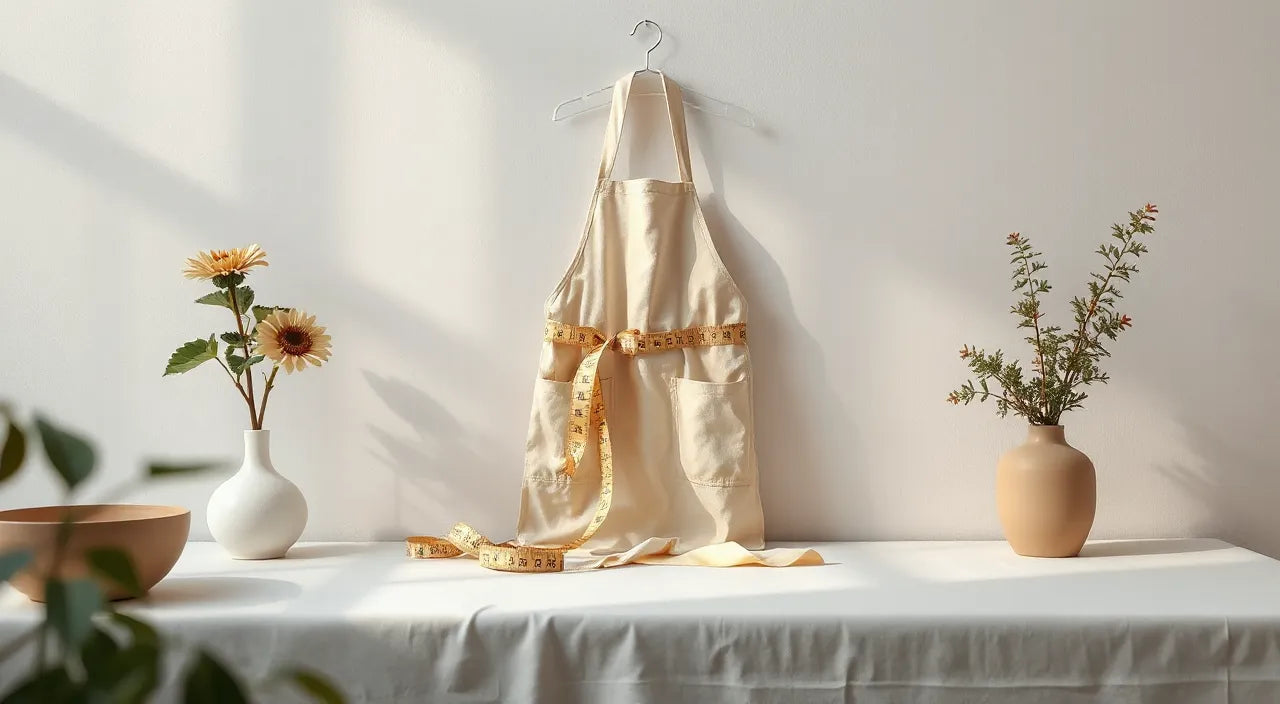
Studio scene cues: measuring tape, hanging apron, care symbols
Personal Experience: From Backyard Baking to Daily Use
I once treated aprons as a short-term solution. I believed I would use one or two only for messy tasks, then store them away. That assumption ended the first time I wore a vintage style apron while baking outdoors with family. The apron felt structured enough to handle flour and batter, yet it remained comfortable during active movement. The heritage look also changed my mindset. Cooking felt more like a ritual than a chore.
After that day, I began keeping the apron within reach. I used it for smaller tasks, such as chopping vegetables, wiping down surfaces, and sorting craft supplies. Over time, it became part of the routine. I learned that the right apron reduces friction. When it fits well, your hands move freely. When the pockets are placed logically, you stop searching for tools. When the fabric is easy to rinse, cleanup becomes faster.
The design also aged gracefully. The vintage pattern did not look flat or washed out after careful care. Instead, it maintained its character. That is one of the biggest reasons people continue using vintage style aprons long after the initial purchase. The apron becomes familiar. The design becomes comforting. The practical coverage becomes dependable.
For home ambiance, I also noticed how the apron complemented other sensory cues. Warm kitchen lighting, coordinated textiles, and a consistent color palette made the space feel cohesive. If you want to maintain a similar approach, you can choose small décor accents. Some shoppers explore character-forward ceramic options such as barn owl ceramic night lights to add a calm mood during evening routines.
Summary & Recommendations
Vintage style aprons deliver more than aesthetics. They protect clothing, support comfortable movement, and add personality to everyday work. When you select with intention, you gain a garment that performs consistently through frequent use. The best results come from matching coverage level, fabric behavior, and fit to your routines.
Here are clear recommendations to guide your next decision:
Prioritize fit and adjustability. A secure neck and waist reduce shifting during movement.
Select fabric based on your schedule. Cotton and blended options often provide a strong balance of comfort and laundering ease.
Choose pocket layouts that match your tasks. Tool access improves efficiency and reduces interruptions.
Verify construction quality. Reinforced seams and clean finishing indicate longevity.
Maintain the design with proper care. Follow care instructions, wash gently, and dry carefully to protect color.
If your goal is a kitchen that feels warm, organized, and intentional, vintage style aprons are a practical place to start. Consider rotating two aprons for different tasks: one for cooking and one for messy projects. This approach helps preserve the fabric finish and keeps your essentials ready.
For additional ambience planning, you can also explore small themed décor items. Some customers pair kitchen textiles with gentle lighting, such as blue heron ceramic night lights, to create a cohesive home atmosphere.
Q&A Section
What makes a vintage style apron different from a basic apron?
A vintage style apron typically emphasizes classic design cues such as bib shaping, heritage-inspired patterns, and balanced proportions. The key difference is that it combines visual character with practical coverage. A basic apron may focus only on function, while a vintage-inspired option often aims to look intentional on display as well as during use.
How should I wash vintage style aprons to avoid fading?
Follow the care label first. In general, washing in cold water with mild detergent helps preserve color. Avoid high-heat drying when the fabric and print are sensitive. Air drying or low-heat drying tends to reduce fading and keeps the apron looking crisp for longer.
Are shorter aprons suitable for cooking, or is full length better?
Shorter aprons can work well for light cooking when you mainly need torso coverage. Full length options offer extra protection for spills and splashes that land lower on the body. If your tasks involve frequent movement near hot surfaces, a longer apron often feels more secure and reduces the need for mid-task adjustments.
What pocket configuration is most useful for home bakers?
Many home bakers benefit from a front pocket or side pockets with firm openings that hold small tools. A pocket that stays open enough for quick access prevents delays while working. If you often use recipe cards or measuring tools, a pocket with sufficient depth for paper and small items can improve workflow.
About the Author
Cassandras Shop is an ecommerce and lifestyle expert team focused on home comfort, functional design, and heritage-inspired shopping decisions. Our expertise emphasizes how apparel and household textiles support daily routines, from fit and fabric selection to practical care habits. We provide clear guidance so customers can choose with confidence and enjoy long-term value in their home. Thank you for reading, and we encourage you to explore vintage style aprons that match your personal workflow.
Disclaimer: This article provides general guidance on apron selection, use, and care. Always follow the care instructions included with the specific garment, and replace items that show wear or damage.
The content in this blog post is intended for general information purposes only. It should not be considered as professional, medical, or legal advice. For specific guidance related to your situation, please consult a qualified professional. The store does not assume responsibility for any decisions made based on this information.