Seasonal Home Decor Ideas for Every Room Refresh
Cassandras ShopUpdated on: July 04, 2026
Seasonal home decor helps you keep your spaces fresh without making permanent changes. By rotating textiles, colors, and accents, you can match your home to the mood of each time of year. The most effective approach balances function, comfort, and visual harmony. With a clear plan, you can update rooms quickly and maintain a cohesive look across your home.
1. How seasonality changes home style
2. Step-by-step seasonal home decor plan
3. Tips for cohesion, budget control, and storage
5. Maintenance and long-term usage
How seasonality changes home style
Seasonal home decor is not only about aesthetics. It is also about how a room feels day to day. People tend to prefer different textures, color temperatures, and lighting qualities as seasons change. In warmer months, homes often feel more open and relaxed. Cooler months typically call for deeper tones, warmer lighting, and softer materials.
When you update your decor seasonally, you create consistency with your lifestyle. For example, spring and summer typically favor lighter fabrics and airy arrangements. Autumn often introduces earthy palette choices and layered surfaces. Winter decor usually leans toward warmth, comfort, and calm lighting that makes evenings feel inviting.
The key is to treat updates like styling, not renovation. You do not need to replace furniture. Instead, you adjust accents, colors, and visual weight. Small changes can have a noticeable effect, especially when you repeat a few key elements across multiple rooms.

Layered textiles and warm light create seasonal comfort
Step-by-step seasonal home decor plan
A repeatable process makes seasonal updates faster and more consistent. Use this method to build a plan that works year after year, with minimal stress and careful spending.
-
Define your seasonal goals. Decide what you want to change most. Choose one focus such as color tone, texture variety, or lighting ambience. This reduces decision fatigue and keeps your updates intentional.
-
Start with a stable foundation. Identify what stays the same across seasons: your wall color, major furniture pieces, and key rug layout. A stable base prevents the look from feeling disconnected when you rotate accents.
-
Pick a compact palette. Select two to three colors for the season and repeat them. For spring, consider fresh neutrals and greens. For autumn, choose warm browns, muted oranges, and cream highlights. For winter, use deep tones and softer metallic accents. Keep the palette compact so it remains coherent.
-
Rotate textiles first. Update curtains, throw blankets, and cushion covers. Textiles provide the fastest visual change because they cover large areas. Choose fabrics that match the seasonal mood: breathable for warm weather and thicker for cooler weather.
-
Adjust lighting and display height. Lighting strongly influences perception of warmth. Replace bulbs where needed, change lampshades, and vary heights by using shelves, side tables, and mantel-like surfaces. Add items that reflect light softly, such as ceramic accents or textured surfaces.
-
Add seasonal focal points. Create one or two prominent areas per room. These might be a dining table centerpiece, a shelf vignette, or an entryway tray display. Use a consistent grouping pattern such as three items, different heights, and one repeating color.
-
Balance seasonal elements with everyday function. Place decor where it supports use, not where it obstructs it. For example, decorative trays on consoles can organize keys and small items while still acting as a visual anchor.
-
Audit and remove what no longer fits. Before adding new decor, remove items that compete with the seasonal look. A declutter pass makes room for the new style and reduces visual noise.
Color and mood cues that stay tasteful
If you want your updates to feel refined, focus on mood cues rather than trends. Use color temperature as your guide. Warmer tones and soft highlights support comfort, while cooler tones and airy neutrals support freshness. Texture cues also matter. Combine smooth finishes with tactile elements such as woven throws or matte accents to avoid an overly flat look.
Tips for cohesion, budget control, and storage
Seasonal home decor can become expensive if you shop randomly. Use these strategies to maintain coherence, protect your pieces, and keep your budget under control.
- Use a “mix-and-match” approach. Keep some decor items year-round and rotate a smaller set each season. This reduces storage needs and prevents a constant buying cycle.
- Repeat the same shapes and materials. If you choose ceramic accents for one season, keep the same material family while changing colors and styles. This creates continuity across the year.
- Plan for the next season while unpacking. When you pack items away, separate them into labeled categories such as “spring refresh,” “autumn warmth,” or “winter glow.” This reduces effort later.
- Protect fragile pieces. Wrap items with tissue or padding and store them in sturdy bins. Keep heavier items on the bottom and label boxes by room for faster setup.
- Set a small seasonal budget. A limited budget encourages thoughtful selection. Prioritize items with broad impact such as cushion covers, table runners, and lighting updates.
- Choose items that match your light. If your home receives warm natural light, you may not need extra warmth from decor. In cooler light, choose warmer accents to create balance.
- Style in groups. Vignettes usually look more intentional than scattered decor. Group items in odd numbers and vary height for visual rhythm.
Room-by-room upgrade ideas
You do not need to update every room to achieve a seasonal effect. Choose the rooms that people notice most and rotate accents there first. The following ideas help you create a cohesive flow throughout your home.
Living room: layered comfort and easy focal points
In the living room, focus on texture and lighting. Swap pillow covers and add a throw blanket that matches your palette. Create a focal point on a console or shelf using a small tray, a ceramic accent, and one taller item for height. If you use wall art, change seasonal frames or add a seasonal textile behind the display for depth.
- Use two to three cushion colors, not more.
- Keep the rug and main upholstery consistent.
- Style one shelf or one tabletop per season.
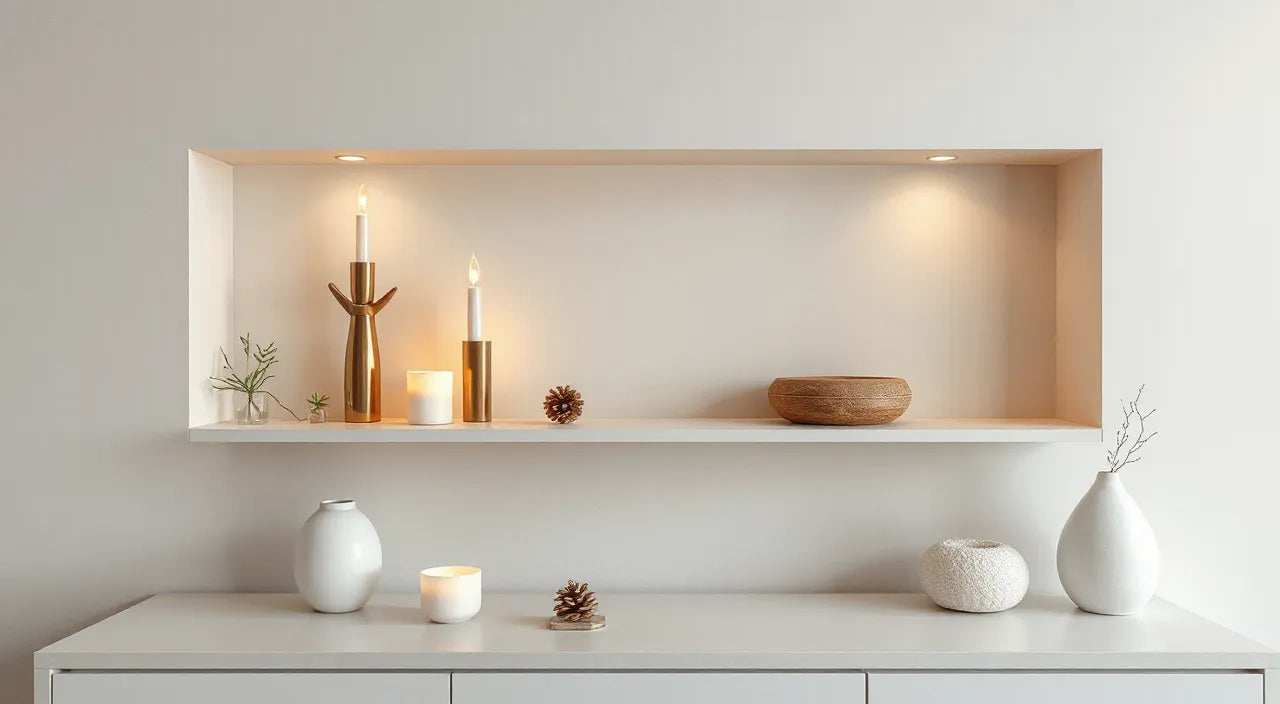
Cozy winter lighting and shelf styling guide the eye
Dining area and kitchen: practical decor with seasonal cues
Dining and kitchen decor should remain functional. Choose table linens, placemats, or simple centerpieces that can be used daily. Seasonal home decor can live in everyday moments. For example, a coordinated set of napkin colors and a ceramic accent on the counter can signal the season without disrupting workflow.
If you want an easy upgrade, add a small decorative layer to existing surfaces. A tray with matching seasonal elements can hold frequently used items while still giving the room a tailored finish.
Bedroom: softer tones and calm ambience
Bedrooms benefit from quieter styling. Use bedding layers, lightweight curtains, and a warm lamp setup to adjust mood. When you shift seasons, update two elements: the bedding layer and the bedside accessory. The rest should stay minimal so the room feels restorative.
To maintain consistency, choose a single accent color for the season and repeat it in bedding and small decor. This approach keeps the bedroom coordinated even when you change several details.
Entryway and hallway: the first impression effect
Entryways are ideal for seasonal home decor because they are visible immediately. Use a console tray or a small wall display to establish the seasonal theme. Keep it simple: a seasonal color accent, one natural element like branches or greenery, and a lighting touch. If your hallway is narrow, prioritize vertical decor such as wall hangings or tall lantern-style lighting.
For a subtle glow that supports a seasonal atmosphere, consider accent lighting pieces such as ceramic night lights. These items are decorative and functional, helping you create a consistent ambience in the evening. If you would like to explore options, you can browse related lighting styles here: blue heron ceramic night light.
Maintenance and long-term usage
Seasonal decor should remain attractive over time. Maintenance is not complicated. Follow these steps to protect textiles, preserve finishes, and keep storage organized.
Care for textiles and washable items
Wash or dry-clean removable covers before storing. Ensure items are fully dry to prevent odors or mildew. Use breathable garment bags for delicate fabrics and avoid overpacking so items remain smooth. If you use natural fibers, consider storing them with moisture control products placed safely away from fabric.
Care for ceramic and surface accents
For ceramic accents, wipe with a soft, dry cloth first. If needed, use a gentle cleaner designed for surfaces and dry thoroughly. Avoid abrasive pads that can reduce gloss or create small scratches. Keep ceramic items separated with padding when storing to prevent chips.
Reuse principles that extend value
To maximize your seasonal home decor investment, reuse components across years. For instance, base colors can remain steady while you rotate patterns and textures. A stable tray or shelf structure can carry different seasonal accents. This strategy helps you develop a long-term style rather than buying a new look each season.
As you plan upcoming changes, you can also coordinate small lighting accents with your seasonal palette. For additional inspiration, you can compare styles such as koi fish and owl-themed options on this site: koi fish ceramic night light and barn owl ceramic night light.
FAQs
How do I choose a seasonal palette without making my home look mismatched?
Select two or three primary colors for the season and repeat them in at least two categories. For example, match cushion covers with a table linen color or coordinate a small accent on a shelf. Keeping the palette compact is the most reliable way to maintain a cohesive look.
What is the fastest way to update seasonal home decor in an existing room?
Start with textiles and lighting. Update pillow covers, add or remove a throw blanket, and adjust the lighting temperature or lamp shade. Then add one focal area per room, such as a tabletop or shelf vignette, to finish the look.
How should I store seasonal decor so it stays clean and ready?
Clean and fully dry textiles before packing. Use sealed bins for protection and label them by season and room. Wrap fragile items and separate them with padding to prevent damage. Store bins in a dry, stable location away from direct sunlight.
Can I use seasonal decor if I prefer a minimal style?
Yes. Minimal seasonal updates work best when you focus on one or two elements. Choose a seasonal color accent and a single textural change, such as a throw or a small ceramic accent, rather than adding many competing items.
Wrap-up & final thoughts
Seasonal home decor is an efficient way to keep your home feeling current, comfortable, and aligned with your lifestyle. A repeatable plan, a compact palette, and a small number of high-impact changes will produce a polished result. Prioritize textiles, adjust lighting, and create one focal point per room to avoid visual clutter.
If you want a low-effort upgrade, build your seasonal set around a few consistent categories. Then rotate accents rather than replacing everything. With a thoughtful approach, your home will look intentional in every season.
About the Author
Cassandras Shop is guided by an emphasis on practical styling and seasonal coherence. The author contributes expertise in home presentation, product curation, and visual balance across rooms. The goal is to help you make decor changes that feel confident, comfortable, and easy to sustain. Thank you for reading, and enjoy shaping a home that reflects each season with clarity and care.
Disclaimer: This article provides general guidance on home styling. Results may vary based on your space, existing finishes, and personal preferences. Always follow care instructions for textiles and materials and use products according to manufacturer recommendations.
The content in this blog post is intended for general information purposes only. It should not be considered as professional, medical, or legal advice. For specific guidance related to your situation, please consult a qualified professional. The store does not assume responsibility for any decisions made based on this information.