Practical Kitchen Decor Inspiration for a Stylish Space
Cassandras ShopUpdated on: March 30, 2026
Creating an inviting kitchen requires thoughtful design choices that blend functionality with aesthetic appeal. This guide explores practical strategies for transforming your cooking space through color schemes, lighting solutions, and decorative accents. Discover how to incorporate natural elements, maximize storage elegantly, and establish a cohesive design theme that reflects your personal style while improving your daily cooking experience.
Table of Contents
- Color Schemes and Wall Treatments
- Lighting Solutions for Ambiance
- Incorporating Natural Elements
- Storage and Display Solutions
- Common Challenges and Solutions
- Comparison of Design Approaches
- Summary and Recommendations
- Frequently Asked Questions
Color Schemes and Wall Treatments
Kitchen decor inspiration often begins with selecting an appropriate color palette. Your color choices establish the foundation for all subsequent design decisions and significantly influence the overall atmosphere of your cooking space. Neutral tones such as white, cream, and soft gray provide a versatile backdrop that accommodates various decorative styles and allows other elements to stand out.
Warm colors including terracotta, sage green, and warm brown tones create inviting, comfortable environments that encourage family gatherings and socializing. These hues work particularly well in traditional or farmhouse-style kitchens where rustic charm enhances the warmth factor. Cool colors like navy blue, soft blue, and charcoal gray offer a contemporary, sophisticated feel that appeals to modern design preferences.
Wall treatments extend beyond paint selection. Consider textured wallpaper, shiplap installations, or decorative tile backsplashes that add visual interest while serving practical purposes. A well-chosen backsplash protects walls from splashes while functioning as a prominent design feature. Subway tiles, mosaic patterns, and hand-painted ceramics each offer distinct aesthetic qualities that can dramatically transform your kitchen's appearance.
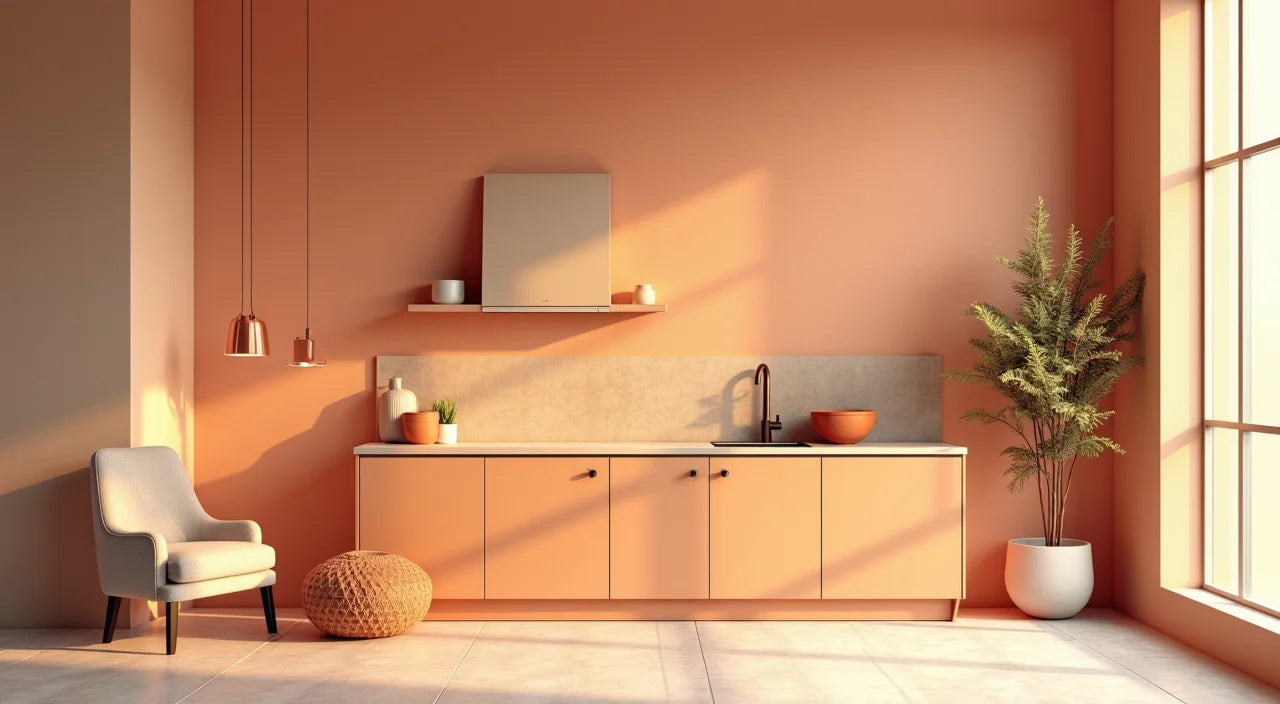
Warm color palettes with textured walls creating inviting, comfortable kitchen atmosphere
Lighting Solutions for Ambiance
Proper lighting transforms both the functionality and mood of your cooking environment. A layered lighting approach combines task lighting, ambient lighting, and accent lighting to create versatile illumination that adapts to different activities and times of day. Task lighting over work surfaces ensures adequate visibility for food preparation and cooking tasks.
Ambient lighting provides overall illumination throughout the space, typically achieved through ceiling fixtures or recessed lighting. This foundational lighting layer should be bright enough for general navigation and cleaning. Accent lighting highlights architectural features, artwork, or decorative displays, adding depth and visual interest to your kitchen design.
Consider pendant lights suspended over islands or countertops, which combine functional task lighting with attractive design elements. Ceramic accent lights and decorative fixtures add personality while providing soft supplementary illumination. Under-cabinet lighting serves practical purposes while creating an elegant, upscale appearance that enhances nighttime ambiance.
Incorporating Natural Elements
Natural materials and elements bring warmth, authenticity, and visual appeal to kitchen spaces. Wood cabinetry, whether stained in deep tones or finished in light natural hues, provides timeless elegance and durability. Open wooden shelving displays everyday items while maintaining a functional aesthetic that celebrates natural beauty.
Stone countertops, including granite, marble, and quartz, offer both beauty and practical durability for busy kitchen work surfaces. Stone backsplashes complement countertop materials while providing visual continuity and protective functionality. Plants and botanicals introduce living elements that purify air, improve mood, and add fresh color to your kitchen environment.
Fresh herbs grown in small containers on windowsills serve dual purposes as decorative elements and culinary ingredients. Potted plants with varied foliage textures create visual interest on open shelving or corner spaces. Water features, wooden bowls, and natural fiber baskets continue the organic theme throughout your kitchen decor inspiration journey.
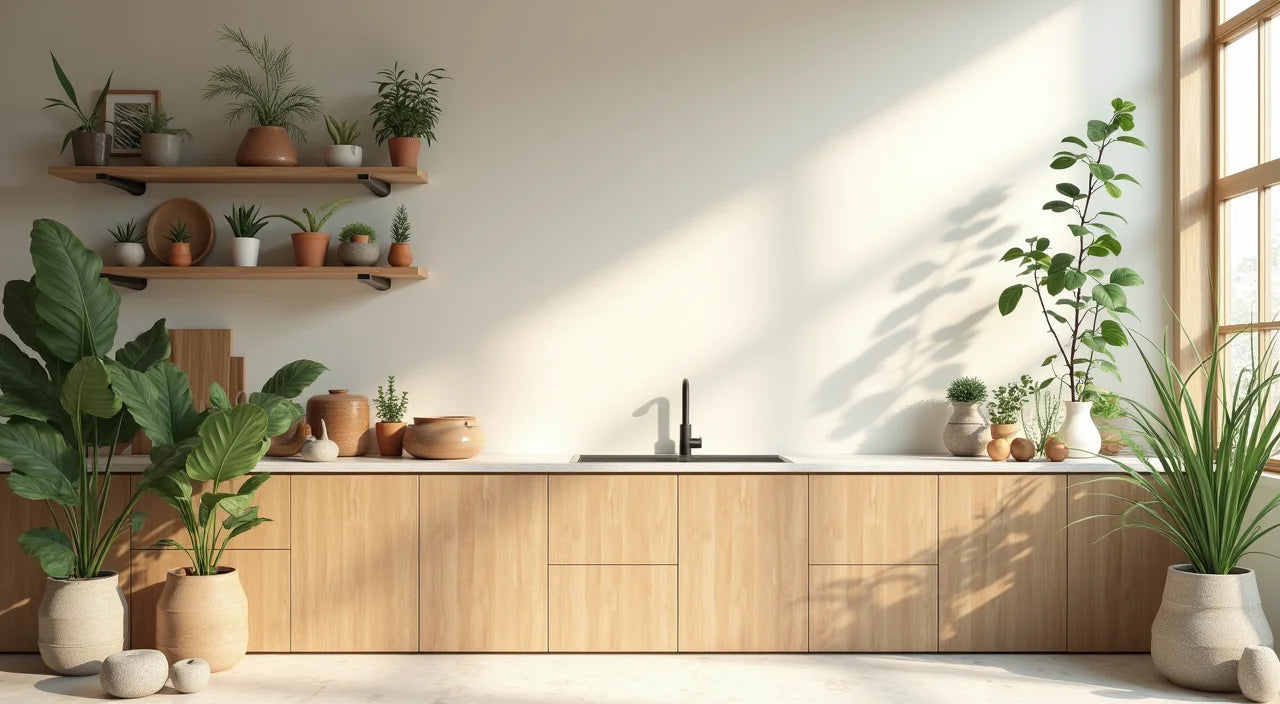
Natural wood textures, stone surfaces, and living plants creating organic kitchen aesthetic
Storage and Display Solutions
Effective storage solutions eliminate clutter while providing opportunities for attractive displays. Open shelving showcases beautiful dishes, glassware, and cooking equipment that you enjoy using regularly. Styling these shelves with a mix of functional items and decorative pieces creates a curated, intentional appearance.
Floating shelves above counters or work areas maximize vertical space while maintaining visual lightness. Glass-front cabinets allow you to display attractive dinnerware, colorful mixing bowls, and decorative serving pieces while protecting them from dust and damage. Closed cabinetry with attractive hardware provides concealed storage for less aesthetically pleasing items.
Wall-mounted spice racks, magnetic knife strips, and hanging utensil organizers keep essential tools accessible while reducing counter clutter. Vintage baskets, woven containers, and decorative boxes organize pantry items while adding texture and warmth. This combination of open and closed storage creates visual balance while maintaining the functionality your cooking activities require.
Common Challenges and Solutions
Many homeowners struggle to balance kitchen decor inspiration with practical functionality. Limited space often restricts design possibilities, yet creative solutions exist for nearly every constraint. Vertical storage solutions, including wall-mounted shelves and hanging organizers, maximize usable space in compact kitchens without consuming valuable floor area.
Budget limitations need not compromise your design vision. Affordable updates including paint, new hardware, lighting fixtures, and decorative accessories deliver significant visual transformations without major renovations. Shopping for quality items at reasonable prices through discount retailers or second-hand sources allows budget-conscious design implementation.
Coordinating multiple design styles creates visual chaos if not thoughtfully executed. Establishing a clear design theme and limiting your color palette to three to four primary hues ensures cohesion. Selecting accessories and décor that share similar visual qualities, materials, or design periods creates a unified, intentional appearance.
Outdated fixtures and finishes age kitchen spaces prematurely. Replacing cabinet hardware, faucets, and light fixtures provides dramatic improvements with minimal cost and effort. These small changes modernize your kitchen without requiring extensive renovations or disrupting your daily routine.
Comparison of Design Approaches
Different design philosophies offer distinct advantages and aesthetic results. Traditional kitchen design emphasizes classic elegance through ornate details, warm wood finishes, and timeless color combinations. This approach creates comfortable, sophisticated spaces that appeal to those valuing enduring style over contemporary trends.
Modern design prioritizes clean lines, minimal ornamentation, and functional efficiency. Sleek cabinetry, stainless steel appliances, and minimalist décor create uncluttered, sophisticated environments. This approach suits busy lifestyles and appeals to those preferring simplicity and contemporary aesthetics.
Farmhouse style combines rustic charm with functional simplicity. Distressed wood finishes, vintage-inspired accessories, and natural materials create warm, inviting spaces with nostalgic appeal. This increasingly popular approach successfully blends vintage elements with modern convenience.
Contemporary design incorporates current trends while maintaining flexibility for future updates. This approach allows experimentation with fashion-forward colors and design elements while preserving overall functionality. Decorative ceramic lighting pieces exemplify how contemporary items can enhance modern kitchen spaces.
| Design Style | Key Characteristics | Best For |
|---|---|---|
| Traditional | Ornate details, warm wood, classic colors | Timeless elegance seekers |
| Modern | Clean lines, minimal décor, efficiency | Contemporary preference holders |
| Farmhouse | Rustic charm, vintage touches, natural materials | Nostalgic comfort seekers |
| Contemporary | Current trends, flexibility, modern elements | Style evolution enthusiasts |
Summary and Recommendations
Transforming your kitchen through thoughtful design choices creates a space that functions beautifully while reflecting your personal style. Kitchen decor inspiration comes from evaluating your lifestyle, preferences, and budget constraints before implementing changes. Begin with foundational decisions including color palette selection and lighting design, then layer in decorative elements gradually.
Start with high-impact, low-cost improvements such as paint, hardware replacement, and lighting updates. These changes deliver visible results quickly and inexpensively. Progress to more substantial investments in new appliances, countertops, or cabinetry as your budget allows.
Incorporate personal touches that make your space uniquely yours. Display favorite collections, showcase meaningful artwork, and select accessories reflecting your interests and lifestyle. Unique ceramic accents add character while serving functional purposes.
Visit design magazines, online platforms, and showrooms to gather inspiration and identify styles resonating with your aesthetic preferences. Create a mood board collecting colors, textures, and design elements you love. This visual reference guide ensures cohesive decision-making throughout your kitchen renovation process.
Frequently Asked Questions
How do I choose the right color palette for my kitchen?
Evaluate your personal preferences, existing home finishes, and desired mood or atmosphere. Consider how different colors appear in your specific lighting conditions throughout the day. Neutral base colors allow flexibility for accessory changes, while bold accent colors express personality. Paint sample sections of your walls and observe them in different lighting before committing to full application. Research successful color combinations in design publications and online inspiration sources.
What lighting components are essential for functional kitchen design?
Implement a layered lighting approach combining task, ambient, and accent lighting. Task lighting over work surfaces ensures adequate visibility for food preparation. Ambient ceiling lights provide general illumination for navigation and cleaning. Accent lighting highlights architectural features, displays, or creates ambiance. Dimmer switches allow flexibility to adjust lighting intensity based on activities and times of day. Under-cabinet lighting serves both functional and aesthetic purposes.
How can I incorporate natural elements without overwhelming my kitchen space?
Select one or two primary natural materials such as wood and stone for major surfaces including cabinetry and countertops. Introduce additional natural elements through smaller items like potted plants, wooden serving pieces, and woven baskets. Maintain balance by limiting natural materials to approximately sixty percent of your décor, reserving space for coordinating painted surfaces and modern fixtures. Quality matters more than quantity; choose fewer, higher-quality natural items over numerous inexpensive pieces.
What affordable updates create the most significant visual impact?
Hardware replacement, paint application, and new lighting fixtures deliver dramatic transformations inexpensively. These high-impact updates require minimal installation time and cost while modernizing dated kitchens substantially. Add new window treatments, replace backsplash tiles, or install open shelving to create additional visual interest. Decorative accessories including artwork, plants, and styled shelving complete your kitchen design transformation affordably.
How do I balance open shelving with necessary storage concealment?
Combine open and closed storage strategically based on item visibility preferences. Display beautiful dinnerware, glassware, and decorative pieces on open shelves while concealing less attractive items behind cabinet doors. Maintain open shelves carefully, styling them intentionally with properly spaced, coordinating items. Closed cabinetry stores pantry items, small appliances, and everyday dishes, reducing visual clutter. This balanced approach maintains functionality while achieving an organized, curated appearance.
Can I update my kitchen design without major renovations?
Absolutely. Strategic updates including paint, lighting, hardware, and accessories create substantial visual transformations without major construction. New cabinet hardware costs little while dramatically modernizing cabinetry. Paint application refreshes walls and cabinetry inexpensively. Lighting fixture replacement improves both functionality and aesthetics affordably. Backsplash updates, new countertop accessories, and decorative elements complete your refresh without requiring extensive renovation investments.
What design style works best for small kitchen spaces?
Contemporary and modern design styles work particularly well in compact kitchens, emphasizing clean lines and minimal clutter. Light colors visually expand tight spaces while reducing visual heaviness. Open shelving eliminates bulky cabinet presence while maximizing usable storage. Vertical design strategies including wall-mounted organizers and tall cabinetry maximize limited floor space. Farmhouse styles work in small kitchens when executed with restraint and careful item selection. Avoid overly ornate or heavily patterned designs that visually reduce available space.
How do I maintain kitchen design cohesion while incorporating personal touches?
Establish a clear design theme and color palette before introducing personal items and collections. Select accessories sharing similar colors, materials, or design periods. Limit personal collections to specific display areas rather than distributing items throughout your space. Quality trumps quantity; fewer carefully selected meaningful items create stronger visual impact than numerous unrelated pieces. Ensure personal touches complement rather than contradict your established design direction.
Where can I find affordable kitchen design accessories and décor items?
Explore online retailers offering competitive pricing on decorative items and kitchen accessories. Visit discount home goods stores, second-hand shops, and estate sales for quality pieces at reasonable costs. Consider artisan ceramic accessories that combine affordability with unique design appeal. Craft fairs and maker markets offer handmade items supporting small businesses while providing distinctive, personalized touches unavailable in mass-market retailers.
Should I follow current kitchen design trends or invest in timeless style?
Prioritize timeless foundational elements including cabinetry, countertops, and major appliances, selecting classic styles that remain attractive regardless of trend cycles. Incorporate contemporary trends through easily changeable accessories including artwork, plants, lighting, and decorative items. This balanced approach ensures long-term satisfaction while allowing flexibility for style evolution. Trendy décor items cost less than major renovations, making them ideal vehicles for fashion-forward expression.
What role does kitchen lighting play in overall design success?
Lighting dramatically influences both functionality and atmosphere in kitchen spaces. Proper task lighting ensures safe food preparation and cooking. Ambient lighting facilitates navigation and general activities. Accent lighting highlights architectural features and decorative displays, adding dimension and visual interest. Lighting design choices impact how colors appear, how spacious the kitchen feels, and the overall mood or atmosphere. Strategic lighting placement and fixture selection contribute significantly to achieving your desired kitchen design aesthetic.
How often should I update my kitchen design?
Major renovations typically occur every ten to twenty years as materials wear or your needs change substantially. Smaller updates including paint, accessories, and hardware can occur every three to five years or whenever you desire refreshed aesthetics. Personal preference, budget availability, and lifestyle changes should guide your update timeline. Strategic investment in timeless foundational elements reduces major renovation frequency while allowing regular accessory updates maintaining design freshness.
What professional resources help develop kitchen design inspiration?
Interior design magazines provide curated inspiration and expert advice on successful kitchen designs. Online platforms including design websites, social media communities, and home décor blogs offer extensive inspiration galleries. Kitchen showrooms allow hands-on evaluation of materials, finishes, and design combinations. Design consultants provide personalized guidance tailored to your specific space and preferences. Professional photographers and design publications document real kitchen transformations inspiring your own project planning.
How can I ensure my kitchen design remains functional while achieving aesthetic goals?
Prioritize functional layout and workflow before considering aesthetic elements. Ensure work surfaces have adequate lighting and accessible tool storage. Maintain clear counter space for active cooking preparation. Balance beautiful open displays with concealed storage for daily items. Select decorative elements that serve functional purposes such as attractive storage containers or lighting fixtures. Regular organization and decluttering preserve both aesthetic appeal and practical functionality throughout your cooking space.
What material choices offer the best balance between aesthetics and durability?
Quartz and engineered stone countertops provide attractive aesthetics with exceptional durability and low maintenance requirements. Solid wood and quality plywood cabinetry offer beauty and longevity when properly finished and maintained. Porcelain and ceramic tiles function as both beautiful backsplashes and practical protective surfaces. Stainless steel appliances combine contemporary aesthetics with easy cleaning and lasting durability. High-quality materials initially cost more but reduce replacement frequency and maintenance expenses over time.
How do I create visual interest without cluttering my kitchen space?
Implement strategic layering combining different textures, materials, and heights throughout your kitchen. Vary surface finishes including matte paint, glossy cabinetry, and textured tile. Use open and closed storage strategically to create visual rhythm and depth. Incorporate vertical elements including tall cabinetry and wall-mounted shelving. Limit color palette to three to four primary hues with coordinating accent colors. Select meaningful decorative items displayed intentionally rather than numerous unrelated accessories scattered randomly.
Thoughtful kitchen design transforms your cooking space into a functional, beautiful environment reflecting your personal style and supporting your daily activities. Begin by establishing clear design direction through color palette selection, lighting planning, and material choices. Layer in natural elements, strategic storage solutions, and meaningful decorative touches that express your personality. Remember that kitchen decor inspiration evolves as your preferences develop, allowing gradual refinement rather than requiring perfect implementation immediately. Implement changes strategically based on your budget and lifestyle needs, prioritizing elements delivering the greatest visual and functional impact. Your transformed kitchen becomes a space you genuinely enjoy using and spending time in daily.
About the Author
This article was created by the team at Cassandras Shop, dedicated to helping homeowners discover beautiful kitchen solutions and home décor inspiration. With extensive experience in interior design guidance and home improvement resources, Cassandras Shop provides thoughtful content supporting your design journey. Whether you are undertaking a complete kitchen renovation or implementing small aesthetic updates, our expertise helps you make confident design decisions. Explore our collection of unique decorative pieces and accessories that enhance any kitchen design aesthetic. Visit Cassandras Shop to discover beautiful, functional items transforming your cooking space into the inviting environment you envision.