Kitchen Towels Guide: Choose, Fold, and Care Easily
Cassandras ShopKitchen towels support a cleaner, safer cooking space by improving drying performance and helping reduce clutter on counters. The right fabric and weave can reduce lint and absorb spills more effectively. A simple wash and rotation routine helps towels stay fresh longer and supports consistent hygiene. Thoughtful storage also keeps towels dry and ready for daily use.
Updated on: 2026-06-02
- 1. Short Summary
- 2. Introduction
- 3. Myths vs. Facts
- 4. Step-by-Step Guide
- 5. How to Choose the Right Kitchen Towels
- 6. Care Routine for Cleaner Towels
- 7. Storage and Rotation Practices
- 8. Frequently Asked Questions
- 9. Summary & Key Takeaways
- 10. Q&A Section
- 11. About the Author
Kitchen towels are one of the most frequently used tools in a home kitchen. They help with drying dishes, wiping surfaces, and managing everyday spills. When towels match the task and are maintained properly, they perform better, last longer, and support a more organized workflow. This guide explains common mistakes, provides a practical setup, and offers clear selection and care advice that can be applied immediately.
If your kitchen towels feel stiff, smell musty, shed lint, or do not dry items well, the problem is usually not your cooking habits. It is often the fabric choice, the wash routine, the way towels are used, or how they are stored between tasks. The following approach helps you improve absorption, reduce odor, and create a simple system that keeps your kitchen looking tidy and functioning efficiently.
Myths vs. Facts
-
Myth: Any towel works equally well for all tasks.
Fact: Different weaves and materials support different goals, such as drying glassware, wiping counters, or handling quick spills.
-
Myth: Hot water always produces the best towels.
Fact: Higher temperatures can wear fibers faster. Follow care labels and adjust water temperature based on soil level and fabric type.
-
Myth: Reusing towels directly after raw food exposure is fine if they are washed later.
Fact: Minimize cross-contact by separating tasks. Use dedicated towels for drying and general wiping when possible.
-
Myth: Musty odors come only from poor detergent.
Fact: Odor often comes from trapped moisture, insufficient drying time, and buildup in the wash routine.
-
Myth: More layers always mean better drying.
Fact: Thickness can help, but effective absorption depends on weave structure and fiber quality.
Step-by-Step Guide
Define towel jobs. Assign one set for drying dishes and another set for wiping surfaces. Keep a separate option for heavy messes.
Select appropriate fabric and weave. Choose absorbent materials with a weave that matches your drying needs and helps limit lint transfer.
Set a wash cadence. Launder towels on a consistent schedule, especially those used for wet tasks. Avoid letting them sit damp.
Improve drying time. Dry towels completely after washing. Damp storage is a common cause of odor and reduced performance.
Rotate towels. Use a small system with multiple towels so no single piece is always damp or overused.
Maintain cleanliness between uses. Replace towels that show heavy staining, persistent odor, or significant fiber shedding.

Split color-coded tasks for clean kitchen workflow
How to Choose the Right Kitchen Towels
Choosing kitchen towels is not only about appearance. You want performance that fits your daily routine. Start with absorption and lint control, then consider durability and ease of care.
Prioritize absorbency and quick drying
For drying dishes and handling spills, absorbency matters. Look for towel types known for strong water uptake and a weave that releases water easily during drying. Quick drying also reduces odor risk.
Consider lint and texture
Cotton and microfiber blends can feel different on glass and stainless steel. If you notice lint on cookware, adjust your towel selection. Tightly woven styles often transfer less debris than very loose knits, but results vary by household laundry habits.
Select the right size for your tasks
Standard towel sizes work for drying plates, while smaller formats are useful for quick countertop wipes. A consistent size also makes it easier to fold towels and store them neatly.
Match towels to surfaces
Use softer options for glass and polished surfaces. For rougher tasks, such as wiping down textured areas or cleaning around the sink, choose towels that can handle frequent washing.
When you want a coordinated, home-friendly approach to daily items, you can also consider how your kitchen accessories fit your overall style. For inspiration on creating an atmosphere with a consistent theme, explore the collection of decorative night lights on koi fish night light options. While these items are not towels, the design principle is similar: consistent selection improves the everyday experience.
Care Routine for Cleaner Towels
A reliable care routine keeps kitchen towels absorbent and fresh. The goal is simple: remove soil effectively, prevent odor buildup, and preserve fiber integrity.
Wash soon after heavy use
Do not leave towels damp in a hamper. Moisture supports odor growth and reduces drying performance. If you cannot wash immediately, spread towels out so they air dry before laundering.
Use the right wash settings
Heavily soiled towels may need a more thorough wash. However, excessively high heat can shorten the life of many fabrics. Use label guidance and consider a longer wash cycle for towels used during frequent wiping or dish drying.
Avoid buildup that reduces absorption
Fabric softener can coat fibers and reduce absorbency. If your towels have become less effective over time, reduce softener use and perform routine deep cleaning when appropriate.
Keep detergent measured
Overuse of detergent can leave residue that impacts texture and absorbency. Use recommended amounts and consider periodic adjustments based on water hardness.
Dry towels completely
Incomplete drying is one of the most common reasons for musty kitchen odors. Dry towels fully before returning them to storage. If you air dry, use good airflow and avoid folding while still wet.
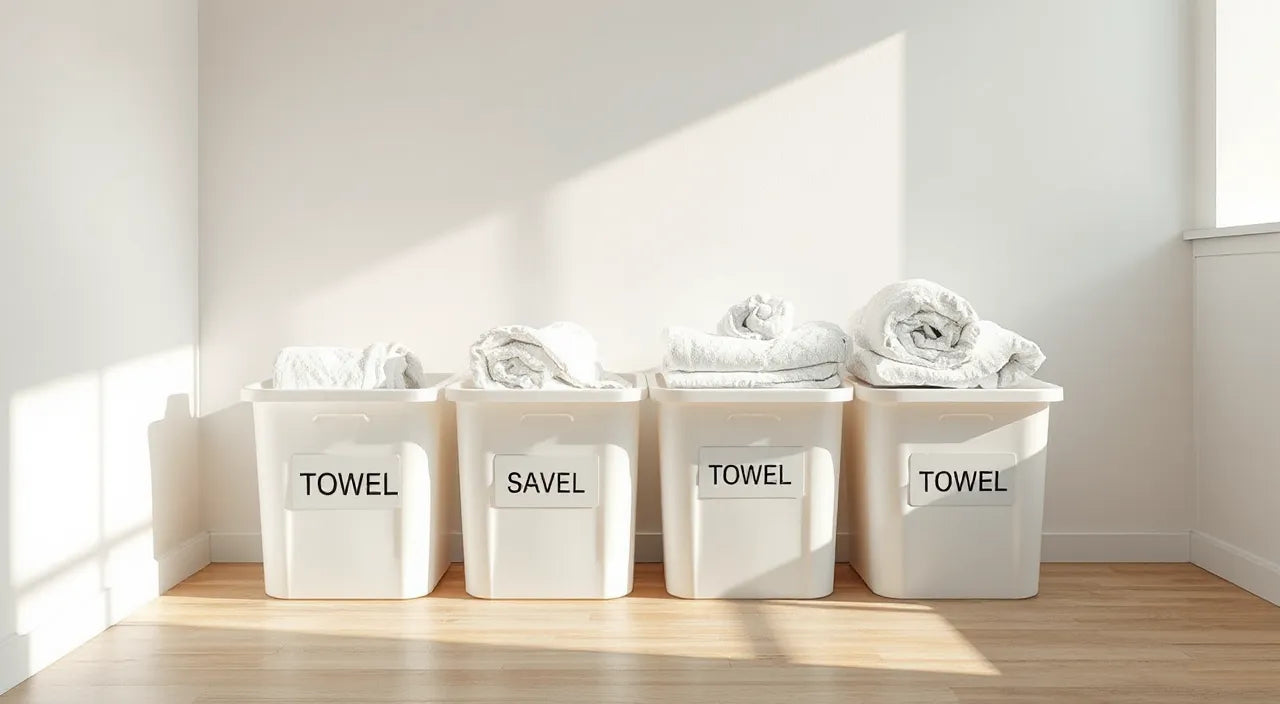
Fresh laundry rotation with dry, labeled towel bins
Storage and Rotation Practices
Even the best fabric cannot perform well if towels remain damp or are stored in ways that trap moisture. Storage is part of towel hygiene and everyday efficiency.
Use breathable storage
Store towels in a dry area with airflow. Covered bins can be appropriate if towels are fully dry and exchanged regularly. A towel rack or hook system can help towels dry between uses.
Maintain separation by task
Use a clear system: drying towel, countertop wiping towel, and specialty towel for messier jobs. Separation reduces cross-contact and helps you keep towels cleaner.
Rotate to prevent overuse
Rotation supports fiber longevity. Using the same towel repeatedly can cause faster wear and more frequent laundering, which may lead to stiffness and odor if drying time is not adequate.
Know when to replace kitchen towels
Replace towels that shed significant fibers, have persistent odors after washing, or show rough texture that transfers lint to dishes. Replacement is not wasteful if it improves hygiene and performance.
If you also use small home accessories that support nightly comfort, consider how lighting placement affects how you move through your home. For themed charm, visit barn owl night light or blue jay night light. Thoughtful, coordinated choices can make routine tasks feel simpler.
Frequently Asked Questions
How many kitchen towels should I keep on hand?
Most households benefit from having at least two sets for drying and wiping so you can rotate and wash regularly. Choose an amount that matches your laundry routine and the number of daily dishwashing cycles.
Why do kitchen towels smell musty even after washing?
Musty odor often comes from damp storage, towels that were not dried completely, or residue that reduces absorbency. Ensure towels dry fully before they are stored, and avoid fabric softener if it contributes to buildup.
Are microfiber towels better than cotton for kitchen use?
Microfiber can be effective for quick wiping and can trap some debris well. Cotton is often preferred for drying dishes because it can be highly absorbent and gentle on many surfaces. The best choice depends on your cleaning goals and laundry routine.
Summary & Key Takeaways
Kitchen towels work best when you treat them like a system, not a single utility item. Choose the right fabric and weave for drying and wiping, wash consistently, and always dry towels fully to prevent odor. Use separation and rotation to improve cleanliness and reduce clutter on your counters. For a more organized home routine, start with simple changes today and refine your selection over time.
Q&A Section
What is the safest way to use kitchen towels during meal prep?
Use separate towels for different tasks. Keep one towel dedicated to drying dishes and another for general surface wiping. For areas that may contact raw food, prioritize immediate laundering or dedicated towels to reduce cross-contact.
How can I reduce lint on plates and glass?
Select towels with a weave that transfers less debris, and ensure towels are clean and fully dried. Avoid overloading the washing machine, measure detergent accurately, and limit fabric softener to preserve fiber performance.
How do I refresh older kitchen towels that have become less absorbent?
Begin by checking detergent buildup and softener use. Launder towels on an appropriate cycle based on their care instructions, dry completely, and evaluate whether the texture has improved. If odor or shedding persists after proper washing, replacement is usually the most effective option.
Do kitchen towels need color separation?
Color separation helps prevent dye transfer and keeps towels looking consistent. If you wash towels together by task, use stable color grouping and follow care labels for best results.
Is air drying sufficient for all kitchen towel types?
Air drying can be effective if towels dry fully and quickly. Use good airflow and avoid storing towels before they are completely dry. For some blends, follow the care label to maintain softness and absorbency.
About the Author Section
Cassandras Shop works with practical home and lifestyle guidance, focusing on improving everyday routines through better selection, better care, and clearer standards. The team’s approach blends product-awareness with usability-first thinking, so guidance stays grounded in real household needs. Thank you for reading, and may your kitchen towels deliver dependable performance every day.
Disclaimer: This article provides general guidance for household care and towel maintenance. Always follow the care instructions on your towel labels and use sound judgment based on your specific materials and hygiene needs.
The content in this blog post is intended for general information purposes only. It should not be considered as professional, medical, or legal advice. For specific guidance related to your situation, please consult a qualified professional. The store does not assume responsibility for any decisions made based on this information.